You bought the machine. You bought the grinder. You watched the YouTube videos, read the Reddit threads, and memorized the "standard" recipe: 18 grams in, 36 grams out, 25–30 seconds.
And yet, your shots taste... off. Sour, bitter, thin, harsh—sometimes all at once. You adjust one thing, it gets worse. You adjust another, it gets different-worse. The bag of expensive beans you were so excited about is half empty, and you still haven't pulled a shot you'd actually want to drink.
Welcome to dialing in. It's the most frustrating part of home espresso, and almost everyone makes the same mistakes when learning. Here's what's probably going wrong—and how to fix it.
Mistake #1: Changing Too Many Variables at Once
This is the big one. The mistake that keeps beginners stuck for weeks.
Espresso has a lot of variables: dose, yield, time, grind size, temperature, distribution, tamping pressure. When a shot tastes bad, the instinct is to change everything. Coarser grind and higher dose and longer ratio and harder tamp.
Now you have no idea what helped and what hurt. You're not dialing in—you're just randomizing.
The fix: Change one variable at a time. Pull a shot, taste it, adjust one thing, pull another shot. Yes, it's slower. Yes, it uses more coffee. But it's the only way to actually learn what each variable does to your specific beans on your specific equipment.
"Dialing in isn't about finding the right settings. It's about understanding cause and effect. That understanding only comes from isolated changes."
The Order of Operations
When starting with a new bag, adjust in this sequence:
- Grind size — Has the biggest impact on extraction
- Yield — Changes strength and balance
- Dose — Fine-tune after grind and yield are close
- Temperature — Usually only needs adjustment for very light or dark roasts
Resist the urge to skip ahead.
Mistake #2: Ignoring the Puck Prep
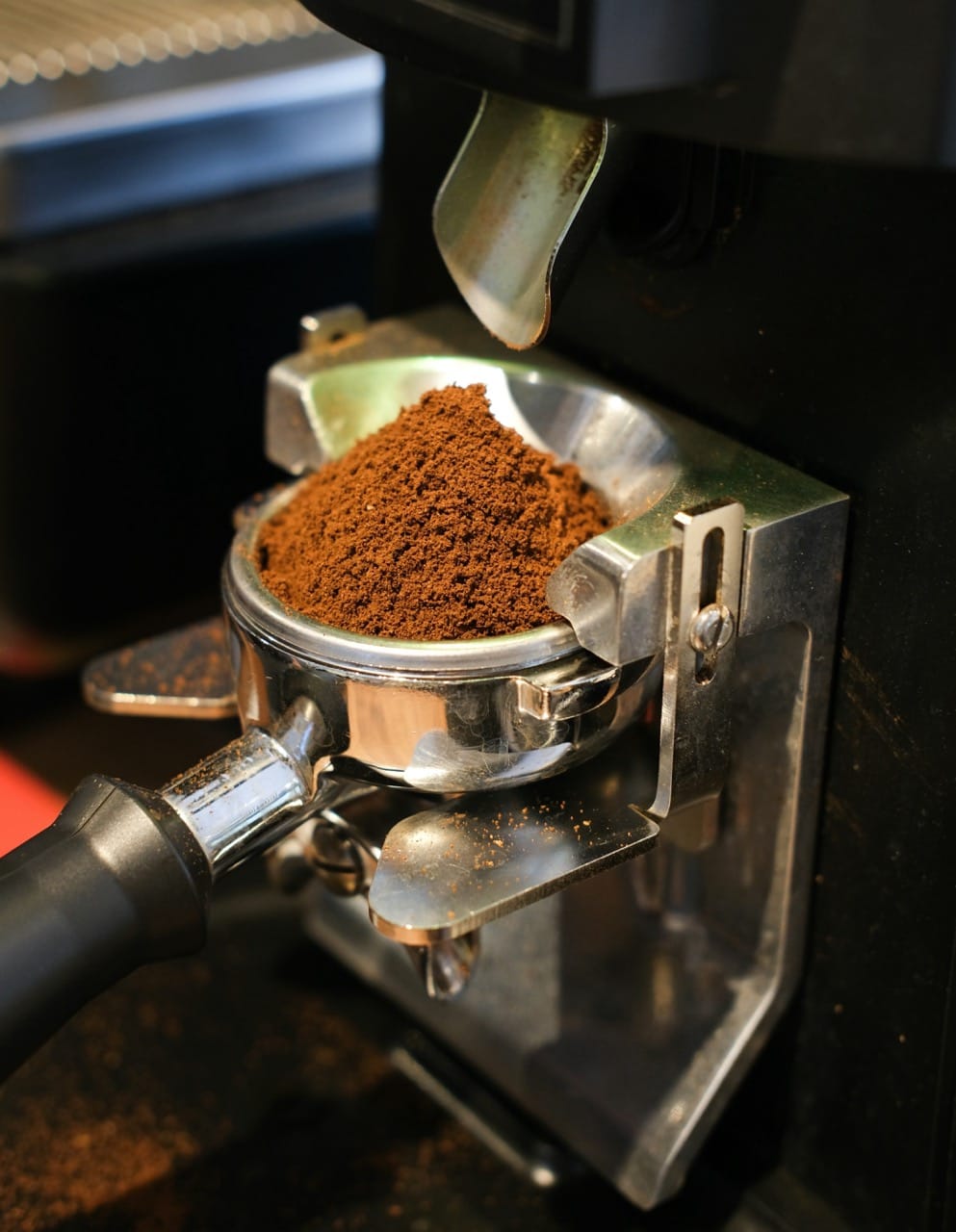
You can have the perfect grind size and still pull terrible shots if your puck preparation is inconsistent. Channeling—where water finds paths of least resistance through the coffee bed—causes uneven extraction. Part of the puck over-extracts (bitter), part under-extracts (sour), and you get a confused, unpleasant shot.
Common puck prep problems:
| Issue | Symptom | Fix |
|---|---|---|
| Uneven distribution | Spraying, fast channels | Use WDT tool or distributor |
| Clumps in the grounds | Sour spots in the shot | Break up clumps before tamping |
| Inconsistent tamp | Uneven flow pattern | Tamp level with consistent pressure |
| Overfilled basket | Puck touches shower screen | Reduce dose or use larger basket |
The fix: Develop a consistent routine. Same distribution technique, same tamp pressure, every single time. Many home baristas find that a WDT tool (a simple needle distribution tool) dramatically improves consistency. It takes an extra ten seconds and eliminates most channeling issues.
Mistake #3: Chasing the Clock Instead of the Taste
The "25–30 second" rule is a guideline, not a law. It's a starting point for medium roasts at typical ratios. But some coffees taste best at 22 seconds. Others need 35. Chasing a specific time instead of chasing flavor leads you in circles.
Here's what actually matters:
- Taste — Is it balanced? Sweet? Pleasant?
- Ratio — What's the relationship between dose and yield?
- Time — How long did it take to reach that yield?
Time is the result of your grind size and dose. It's diagnostic information, not a target. If a shot tastes perfect at 24 seconds, it's not wrong because some chart said 27.
The fix: Taste first, then look at the timer. Ask yourself: is this shot sour (under-extracted) or bitter (over-extracted)? Adjust grind size based on taste, and let the time fall where it falls.
A Simple Extraction Framework
| Taste | Problem | Adjustment |
|---|---|---|
| Sour, sharp, thin | Under-extraction | Grind finer |
| Bitter, harsh, ashy | Over-extraction | Grind coarser |
| Sour and bitter | Channeling | Fix puck prep first |
| Balanced but weak | Low extraction + low strength | Grind finer and/or increase yield |
| Balanced but intense | Good extraction, high strength | Increase yield for lighter body |
Mistake #4: Not Letting the Beans Rest
Fresh-roasted coffee needs time to degas. Beans that are too fresh—within 3–5 days of roasting—contain so much CO2 that they resist water penetration. Shots pull blonde and bubbly, with erratic flow and sour flavors.
This confuses a lot of home baristas. You just got these expensive beans, they're the freshest you've ever had, and they taste worse than the two-week-old bag from the grocery store? It feels backwards.
The fix: Rest your beans. For espresso, most coffees hit their stride between 7–14 days post-roast. Lighter roasts often need longer—up to three weeks. Darker roasts can be ready sooner.
If you must use very fresh beans, try:
- Grinding slightly coarser than usual
- Using a longer pre-infusion if your machine allows
- Accepting that the first few days won't be optimal
Mistake #5: Giving Up Too Early on a Bag
Dialing in takes time. Most home baristas use 100–200 grams of coffee—sometimes more—before they find settings that really work for a new bag. That's a quarter to half of a typical retail bag spent on "bad" shots.
This feels wasteful. The temptation is to decide the beans are bad, or your equipment isn't good enough, or espresso just isn't for you. You move on before you've given the coffee a fair chance.
The fix: Commit to the process. Accept that dialing-in shots aren't wasted—they're tuition. You're learning about your equipment, your palate, and how different coffees behave.
Some strategies to reduce waste:
- Pull shorter shots while dialing in. Use a 1:1.5 ratio to test extraction before committing to full shots.
- Keep notes. Write down every adjustment so you don't repeat dead ends.
- Drink the "bad" shots in milk drinks. A sour espresso you wouldn't drink straight is often fine in a latte.
- Buy smaller bags until you're confident in your process.
"The baristas you admire have pulled thousands of bad shots. That's not failure—that's how expertise is built."
The Bigger Picture
Dialing in espresso is genuinely hard. Professional baristas spend years developing their palates and intuition. Your home setup—with different equipment, different beans, and stolen moments before work—is a more challenging environment than a commercial café.
But that's also what makes it rewarding. When you finally pull a shot that's sweet, balanced, and complex—one you dialed in yourself through patient adjustment—it tastes better than anything you could buy. Not because it's objectively superior, but because you understand it.
Every mistake is information. Every sour shot teaches you something about extraction. Every bitter mess refines your sense of what to adjust next.
Stick with it. Take notes. Change one thing at a time.
Your perfect shot is waiting. It just takes a few imperfect ones to get there.