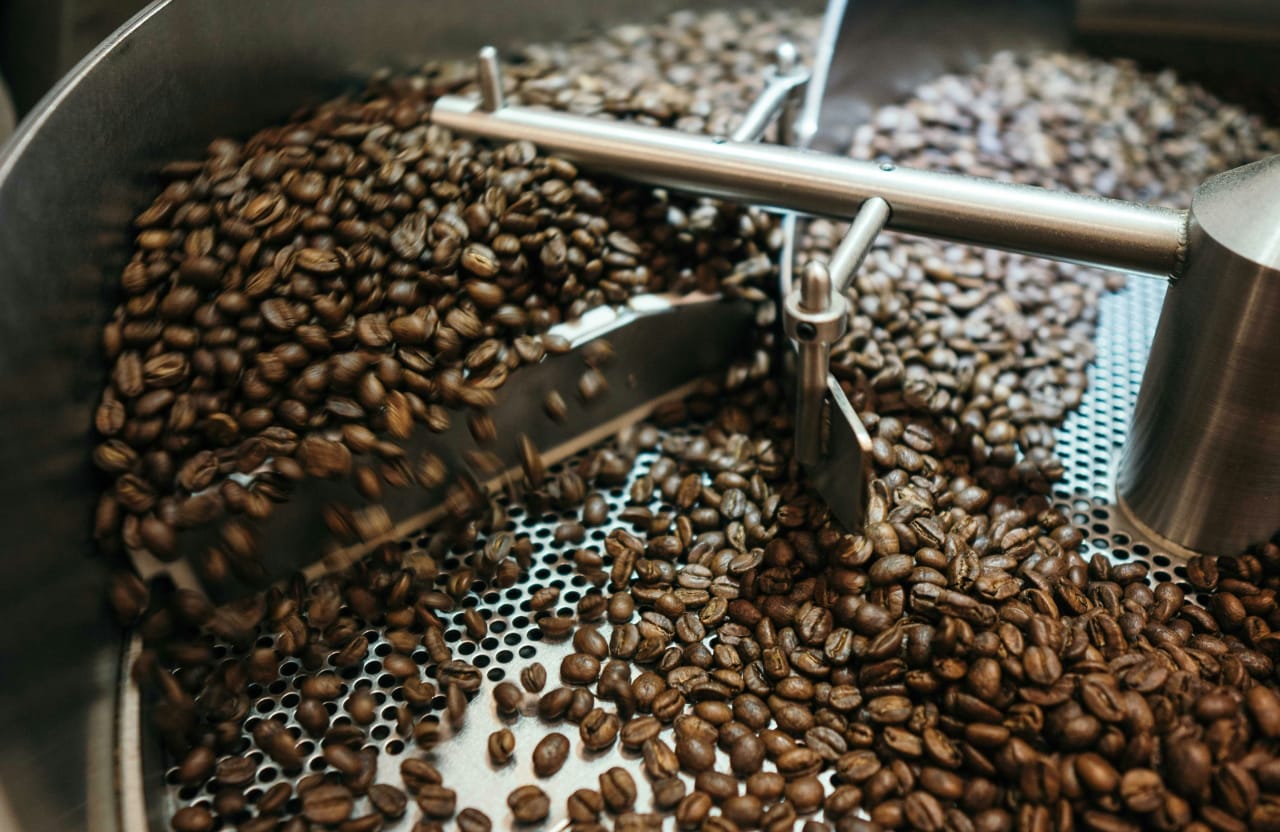
Every coffee that earns a spot on our menu goes through a journey before it reaches your cup. Not just the journey from farm to port to warehouse—though that story matters too—but the journey inside our roastery. The tasting, testing, adjusting, and questioning that happens between when beans arrive and when we're confident enough to put our name on them.
This is the story of fourteen days with our newest single origin: a washed Ethiopian from the Guji zone. From the first cupping to the final release, here's what it actually takes to bring a coffee to life.
Day 1: Arrival
The bags arrived this morning. Sixty kilos of green coffee from the Shakiso district in Guji, Ethiopia. The importer's notes promised "jasmine, bergamot, and stone fruit." We've been burned by promising descriptions before, so we try not to get too excited.
The green beans look good—consistent size, pale jade color, minimal defects. We pull a small sample for our first test roast tomorrow.
Origin details:
| Attribute | Detail |
|---|---|
| Region | Guji Zone, Oromia |
| District | Shakiso |
| Altitude | 2,100–2,250 meters |
| Process | Fully washed |
| Variety | Indigenous heirloom |
| Harvest | November 2024 |
Day 2: First Roast
We start conservative. Light roast, aiming to preserve whatever delicate florals might be hiding in there. First crack at 385°F, dropped at 400°F after a short development time.
The smell coming off the roaster is promising—bright, tea-like, with something floral underneath. But smell isn't taste. We'll cup it tomorrow after it degasses overnight.
Day 3: First Cupping
Four cups on the table. Same roast, same grind, same water temperature. We slurp in silence, scribbling notes before comparing.
Initial impressions:
- Aroma: Honeysuckle, lemon zest, raw honey
- Flavor: Bergamot up front, white peach in the middle, clean finish
- Body: Tea-like, silky
- Acidity: Bright but not sharp
"This is the one where you smell it and immediately know there's something special. That jasmine note isn't marketing—it's actually there."
The consensus: exceptional aromatics, but the finish drops off too quickly. We want more development to extend the aftertaste without killing the florals. Back to the roaster.
Day 4: Second Roast
We push development time by 30 seconds, letting the beans caramelize slightly longer after first crack. Drop temperature stays the same.
The color is marginally darker—probably imperceptible to anyone but us. We'll see tomorrow if it made a difference.
Day 5: Second Cupping
Better. The finish now has a lingering honey sweetness that wasn't there before. But we may have lost a fraction of the bergamot brightness.
We're splitting hairs at this point. Two team members prefer roast one; two prefer roast two. We decide to try splitting the difference.
Day 6: Third Roast
Development time between roasts one and two. We're chasing something specific now: that explosive floral aroma with a finish that doesn't disappear.
We also roast a batch slightly darker as an experiment—what happens if we push this coffee toward medium territory? Sometimes origins surprise you.
Day 7: Rest Day
Coffee needs to degas before evaluation. We step away, work on other projects, try not to obsess. The darker experimental roast smells almost chocolatey coming out of the cooling tray, which is intriguing but suspicious. Ethiopian coffees aren't usually about chocolate.
Day 8: Third Cupping
Today we cup all three profiles side by side:
| Roast | Development | Notes |
|---|---|---|
| Light (v1) | Short | Brightest florals, weak finish |
| Light (v2) | Medium | Balanced, honey sweetness |
| Medium (v3) | Long | Chocolate emerges, florals fade |
The medium roast is interesting—it would probably sell well to people who find light roasts too acidic. But it's not this coffee anymore. It could be any good washed Ethiopian. The origin character is muted.
Version two wins. It's the best balance of what makes this coffee special and what makes it enjoyable to drink.
Day 9: Brew Method Testing
Roast profile locked. Now we need to figure out how to help customers brew it well.
We test across methods:
Pour-Over (V60)
Stunning. The clarity of paper filtration lets those florals shine. This is the recommended method.
Our recipe: 15g coffee, 250g water, 205°F, 2:45 total brew time
French Press
Heavier body, muted aromatics. Not bad, but not ideal. The jasmine gets lost in the fuller mouthfeel.
AeroPress
Surprisingly excellent. Concentrated florals, almost like a tea. Good alternative for single-cup brewing.
Espresso
Tricky. The acidity is intense at typical espresso ratios. Works better as a lungo or in milk drinks where the bergamot cuts through steamed milk beautifully.
Day 10: Dial-In Day
We spend hours adjusting grind sizes, ratios, and temperatures for each brew method. The goal is to give customers starting-point recipes that actually work, not generic instructions copied from the internet.
The pour-over sweet spot: slightly finer than our usual Ethiopian grind, with water on the cooler end of the acceptable range. Too hot and the florals turn sharp.
Day 11: Description Writing
The hardest part of any release: putting flavor into words without sounding pretentious or making promises the coffee can't keep.
We go through a dozen drafts. "Jasmine" stays—it's accurate and evocative. "Bergamot" makes the cut because it's specific and true. We drop "effervescent" because nobody talks like that.
Final tasting notes: Jasmine, bergamot, white peach, raw honey. Tea-like body with bright, clean acidity.
Day 12: Photography
We shoot the beans, the bags, the pour-over process, a finished cup backlit by morning light. Coffee photography is its own skill—making brown liquid look appealing isn't easy. The jasmine note inspires us to include some floral elements in the styling. Subtle, not cheesy.
Day 13: Team Tasting
Everyone on staff—not just the roasting team—tastes the final product. The feedback is important. If someone who doesn't geek out about coffee can taste the florals and enjoy the cup, we've succeeded.
"It smells like fancy tea and tastes like summer. I'd drink this every day."
That's the review we wanted.
Day 14: Release
The Guji goes live. Bags are packed, website is updated, first orders ship by noon.
Fourteen days from arrival to release. Dozens of test roasts and cuppings. Hours of discussion about thirty-second differences in development time. All for a coffee that, if we've done our job right, will taste effortless—like it was always supposed to be exactly this way.
That's the invisible work behind every bag. And honestly? It's our favorite part.