You spent good money on those beans. Maybe you splurged on a single-origin Ethiopian with tasting notes you actually wanted to taste. Maybe you finally found a roaster you love and ordered a few bags to stock up.
And then, two weeks later, the magic is gone. The coffee tastes flat. Stale. Like a shadow of what it was when you first opened the bag.
Here's the thing: coffee doesn't go bad the way milk does. It won't make you sick. But it absolutely degrades—and faster than most people realize. The good news? Proper storage can keep your beans tasting fresh for weeks instead of days.
Let's talk about what's actually happening and how to stop it.
Why Coffee Goes Stale
Coffee beans are surprisingly fragile after roasting. The roasting process creates hundreds of volatile compounds—the aromatics and flavors that make specialty coffee worth drinking. But those compounds start escaping the moment the beans cool.
Four enemies accelerate this process:
| Enemy | What It Does |
|---|---|
| Oxygen | Oxidizes oils and aromatics, creating flat, cardboard-like flavors |
| Moisture | Introduces humidity that degrades cellular structure and encourages mold |
| Heat | Speeds up chemical reactions that break down flavor compounds |
| Light | UV rays degrade organic compounds, particularly in clear containers |
Every time you open a bag, oxygen rushes in. Every day on the counter, light and heat chip away at freshness. The clock is always ticking.
"You can't make stale coffee taste fresh again. Storage is about slowing the inevitable, not reversing it."




The Ideal Storage Conditions
If you remember nothing else, remember this: cool, dark, dry, and airtight.
Temperature
Room temperature is fine for beans you'll use within 2–3 weeks. Aim for 60–70°F (15–21°C). Avoid storing coffee near the stove, on top of the refrigerator, or anywhere that experiences temperature swings.
Light Exposure
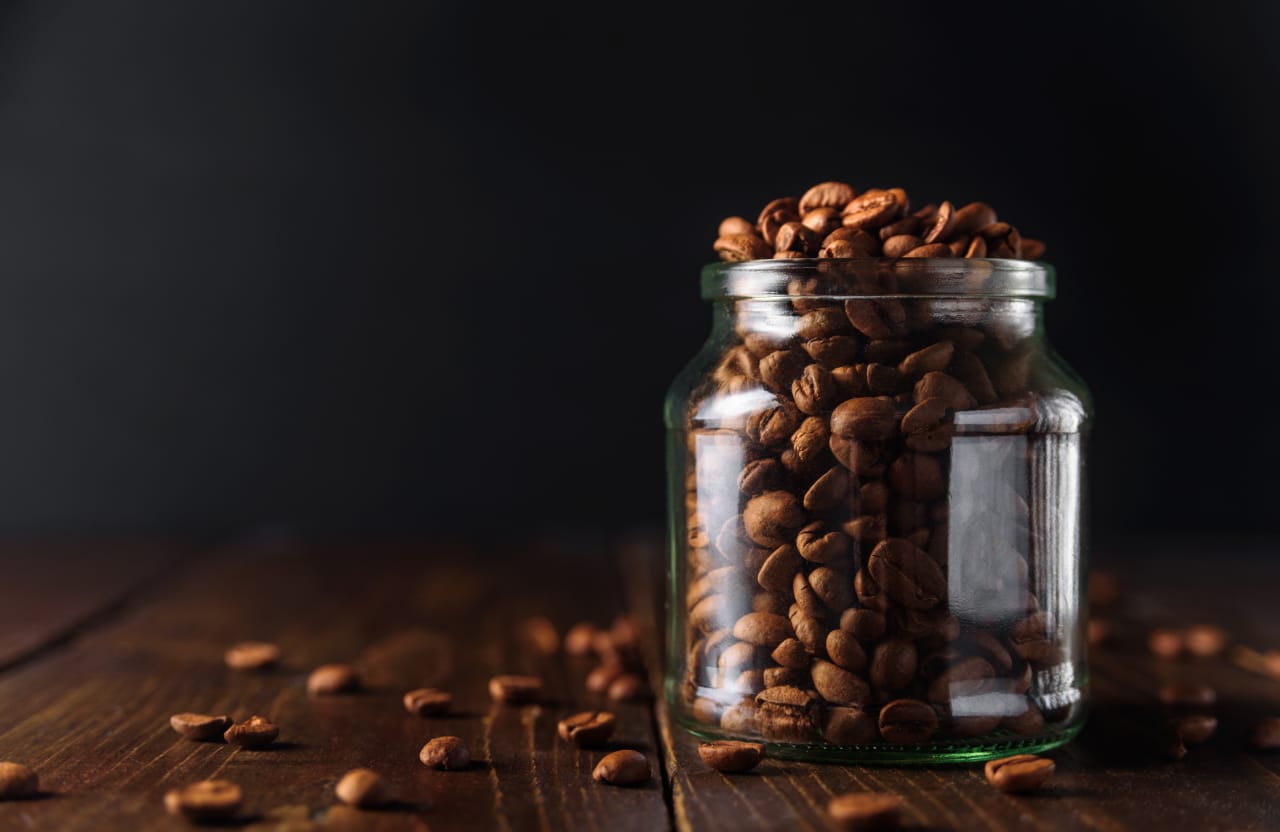
Keep beans in opaque containers or inside a dark cabinet. That beautiful glass jar on your counter might look great, but it's slowly destroying your coffee. If you love the aesthetic, at least store it inside a pantry.
Humidity
Coffee is hygroscopic—it absorbs moisture from the air. High humidity environments accelerate staling and can introduce off-flavors. Keep beans away from the sink, dishwasher steam, or humid basement storage.
Air Exposure
This is the big one. Oxygen is coffee's worst enemy after roasting. Minimize exposure by using containers that push out or block air effectively.
Container Options Ranked
Not all storage solutions are equal. Here's how common options stack up:
Best: Vacuum-Sealed Canisters
Containers like the Fellow Atmos or Airscape use a valve or plunger mechanism to push air out before sealing. This dramatically slows oxidation.
Pros:
- Removes most oxygen from the container
- Reusable and durable
- Some models have one-way CO2 valves
Cons:
- Higher upfront cost ($25–40)
- Requires manual pumping or pressing
Good: One-Way Valve Bags
Many specialty roasters ship in bags with one-way degassing valves. These let CO2 escape (freshly roasted coffee off-gasses for days) without letting oxygen in.
Pros:
- Already included with quality beans
- Resealable options work well
- No additional purchase needed
Cons:
- Bags degrade over time
- Seal quality varies by brand
- Not truly airtight after multiple openings
Acceptable: Airtight Ceramic or Metal Canisters
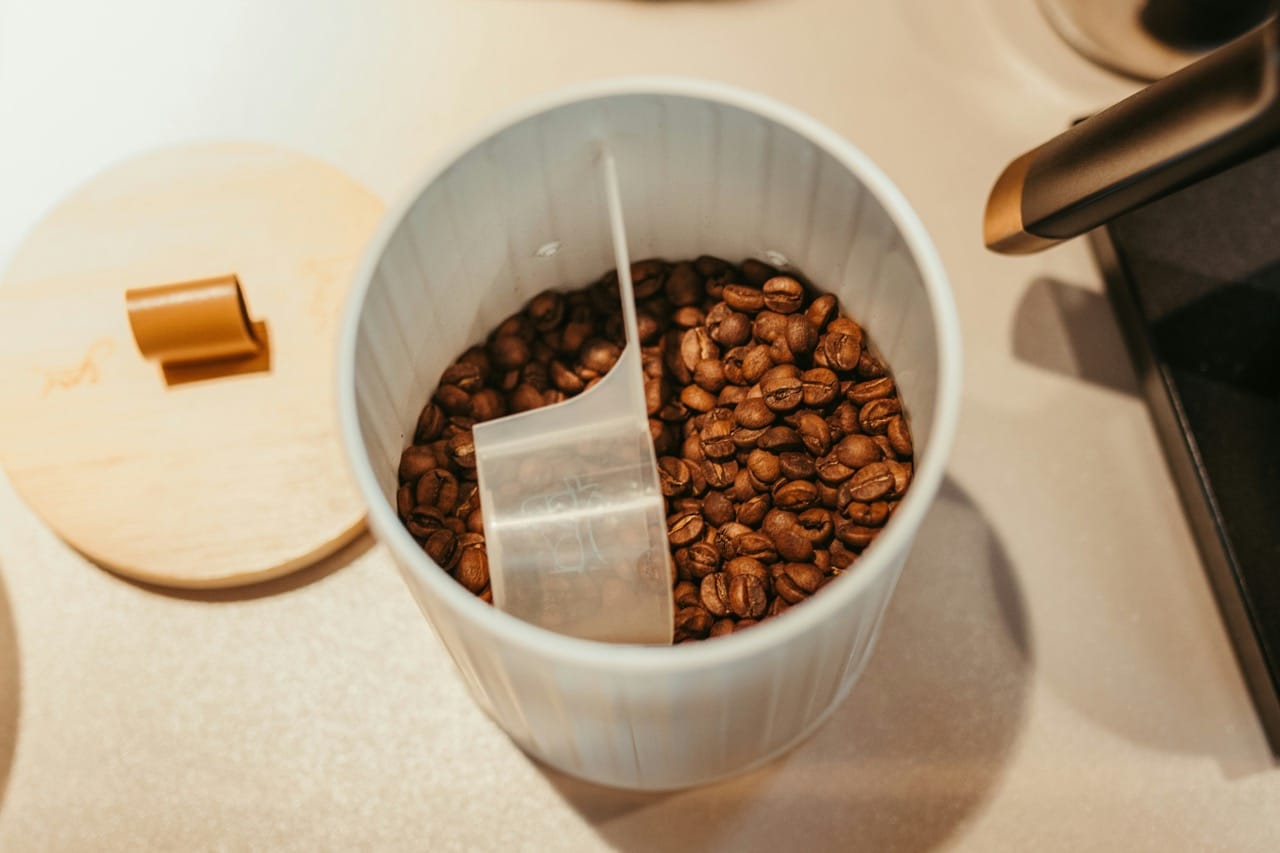
A good ceramic or stainless steel canister with a rubber gasket seal will block light and reduce air exchange.
Pros:
- Affordable and widely available
- Blocks light completely
- Looks nice on the counter
Cons:
- Doesn't remove existing air
- Opens fully each time, introducing fresh oxygen
Avoid: Glass Jars and Original Paper Bags
Clear glass exposes beans to light. Paper bags offer almost no protection against oxygen or moisture. Both are recipes for rapid staling.

The Freezer Debate
Should you freeze coffee beans? The internet fights about this constantly. Here's the nuanced answer:
For short-term storage (under 3 weeks): Don't bother. Room temperature in a good container is fine.
For long-term storage (1–3 months): Freezing works, but only if you do it right.
How to Freeze Coffee Properly
- Divide into portions. Split your beans into weekly amounts before freezing. You only want to thaw what you'll use.
- Use truly airtight containers. Freezer bags work if you push out all the air. Vacuum sealing is ideal.
- Freeze quickly. Put portions in the back of the freezer where temperature is most stable.
- Thaw completely before opening. Let the sealed container reach room temperature before exposing beans to air. This prevents condensation from forming on cold beans.
- Never refreeze. Once thawed, use within 2 weeks. The freeze-thaw cycle damages cell structure.
Done correctly, frozen beans can taste nearly as good as fresh for up to three months. Done wrong, you'll end up with freezer-burned, moisture-damaged coffee that tastes worse than if you'd just left it on the counter.
How Long Do Beans Actually Last?
Freshness timelines depend on storage quality and your palate sensitivity. Here's a general guide:
| Storage Method | Peak Freshness | Acceptable Quality |
|---|---|---|
| Original paper bag | 3–5 days | 1 week |
| Resealable valve bag | 2 weeks | 3–4 weeks |
| Airtight canister | 2–3 weeks | 4–5 weeks |
| Vacuum canister | 3–4 weeks | 6 weeks |
| Properly frozen | 2–3 months | 3–4 months |
"Peak freshness" means the coffee tastes as the roaster intended—vibrant, complex, aromatic. "Acceptable quality" means it's still decent, just muted. Beyond that, you're drinking stale coffee.
A Few More Tips
Buy smaller quantities more often. The best storage solution is not needing to store beans for long. If you can, buy two weeks' worth at a time.
Check roast dates. Beans are best 7–21 days after roasting. If there's no roast date on the bag, that's a red flag.
Grind just before brewing. Ground coffee stales 5–10 times faster than whole beans. All the storage advice in the world won't save pre-ground coffee sitting in your pantry.
Keep the bag inside the container. If using a canister, put the whole bag inside rather than pouring beans directly. Less surface contact, easier cleanup.
The Bottom Line
You can't stop coffee from aging. But you can slow it down dramatically with simple habits: airtight containers, cool and dark storage, and buying only what you'll use in a few weeks.
Those beans you love? They deserve better than a paper bag on a sunny counter. Give them a fighting chance, and they'll reward you with better cups, longer.
Your future mornings will taste the difference.