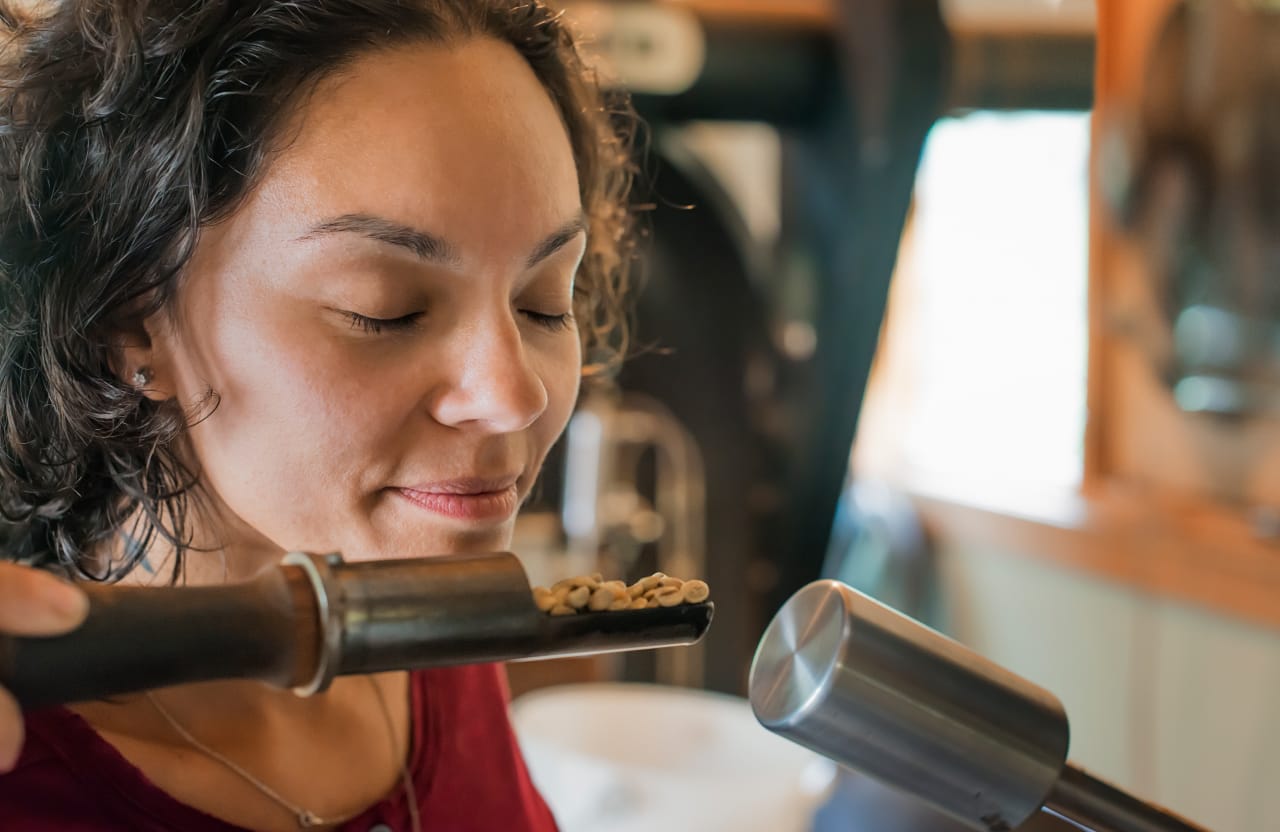
She Left Corporate Law to Roast Coffee—Here's What She Learned
Maya Chen was billing 2,400 hours a year at a Manhattan law firm when she bought her first bag of specialty coffee. It was a Kenyan single origin from a small Brooklyn roaster—bright, fruity, nothing like the burnt office drip she'd been surviving on through document review sessions.
That bag led to a hand grinder. The grinder led to a pour-over setup. The pour-over led to an obsession. And the obsession, eventually, led to a resignation letter that made her parents question everything.
Five years later, Maya runs Threadline Coffee, a roastery in Hudson Valley that's built a cult following for its meticulously sourced, precisely roasted beans. We sat down with her to talk about the leap, the lessons, and what she wishes someone had told her before she traded briefs for burlap bags.
The Decision to Leave
What was the moment you knew you had to make a change?
It wasn't dramatic. No breakdown in the office bathroom, no screaming match with a partner. It was a Tuesday. I was reviewing a contract for a deal I didn't care about, for a client I'd never meet, and I realized I couldn't remember the last time I'd made something with my hands.
I'd spent a decade getting really good at moving words around on paper. And I was proud of that work, in a way. But coffee had shown me what it felt like to create something tangible. To hand someone a cup and watch their face change. That feeling was worth chasing.
"I didn't leave law because I hated it. I left because I found something I loved more."
Were people supportive?
Some. My friends mostly thought it was brave, which is what people say when they think you're making a mistake but don't want to say so. My parents were confused—they'd sacrificed a lot to give me opportunities, and here I was walking away from the path those opportunities were supposed to lead to.
But my wife got it immediately. She said, "You talk about coffee the way you used to talk about law school. Before law school actually happened." That stuck with me.
The Early Days
What was the hardest part of starting out?
Learning to be bad at something again. In law, I was senior. I knew the answers, or I knew how to find them. In coffee, I was a complete beginner surrounded by people who'd been roasting for decades.
My first roasts were terrible. Burnt, underdeveloped, uneven. I remember one batch that somehow managed to be all three at once. I almost cried. Then I took notes and tried again the next day.
| Year | Milestone |
|---|---|
| 2019 | Left law firm, enrolled in roasting courses |
| 2020 | Apprenticed at a Brooklyn roastery |
| 2021 | Launched Threadline from a shared commercial kitchen |
| 2022 | Opened own roasting facility |
| 2023 | First wholesale accounts |
| 2024 | Expanded to 40+ wholesale partners |
How did you learn the craft?
Courses, apprenticeships, and a lot of YouTube videos at 2 AM. I took every class I could find—roasting fundamentals, sensory analysis, green coffee buying. I worked for free at a roastery on weekends just to watch and ask questions.
But honestly? The real learning came from doing. Roasting batch after batch, cupping constantly, and being willing to throw away a lot of coffee that wasn't good enough.

What Law Taught Her About Coffee
Did anything from your legal career transfer to roasting?
More than I expected. Contract negotiation skills help when you're working with importers and wholesale accounts. The attention to detail that made me good at document review makes me obsessive about consistency in roasting. And honestly, the stamina—law taught me how to work hard for a long time without seeing immediate results.
What about the business side?
Law firms are businesses, even if lawyers don't like to think of them that way. I understood margins, overhead, the importance of systems. I'd seen firms run well and firms run poorly. When I started Threadline, I treated it like a client from day one. Business plan, financial projections, quarterly reviews.
A lot of creative people resist that stuff. But good systems are what let you stay creative. If I'm not worried about payroll, I can focus on finding the next amazing coffee.
The Lessons
What do you wish you'd known before making the leap?
Three things:
- Your timeline is wrong. Whatever you think it'll take to get established—double it. I thought I'd be profitable in eighteen months. It took three years.
- Identity is stickier than you expect. I was "Maya the lawyer" for a decade. Becoming "Maya the roaster" took longer than learning to roast. There's grief in career change, even when it's the right choice.
- The coffee industry is small. Everyone knows everyone. Your reputation is everything. Be kind, be honest, pay your invoices on time.
Any regrets?
I regret not doing it sooner. But I also know I wasn't ready sooner. The financial cushion from law gave me runway to fail without catastrophe. The discipline gave me structure. Maybe I needed those years to appreciate what I was leaving.
"Every terrible document review session was funding my future roastery. I just didn't know it yet."
Advice for Career Changers
What would you tell someone considering a similar leap?
Start before you quit. I was roasting at home for two years before I left law. I took courses on weekends, worked harvest seasons during vacations. By the time I resigned, I wasn't starting from zero—I was starting from two years in.
Also: save more money than you think you need. Then save more. The freedom to make mistakes without financial panic is invaluable.
Is it worth it?
Every day. Even the hard ones.
Last week I was up at 4 AM because a roast wasn't coming out right, and I was exhausted, and I had wholesale orders to fill. And I thought: I'm tired, but I'm not depleted. There's a difference.
In law, I was depleted. The work took more than it gave. Coffee gives back. Not always in money—especially not at first—but in satisfaction, in community, in the simple pleasure of making something good.
That's worth more than billable hours ever were.
Where Threadline Is Headed
Maya's roastery now supplies over forty cafés and restaurants across the Northeast. She's planning a small tasting room adjacent to the roasting facility, set to open next spring.
"I want people to see where their coffee comes from," she says. "Not just the farm—though that matters—but the roasting, the care, the intention. Coffee is a craft. I want to share that."
For someone who spent a decade crafting legal arguments, she's found a different kind of precision. The stakes are lower, but the rewards, she insists, are higher.
"I used to win cases," Maya says, smiling. "Now I win mornings. I'll take it."